Travel
The Decline of Angkor
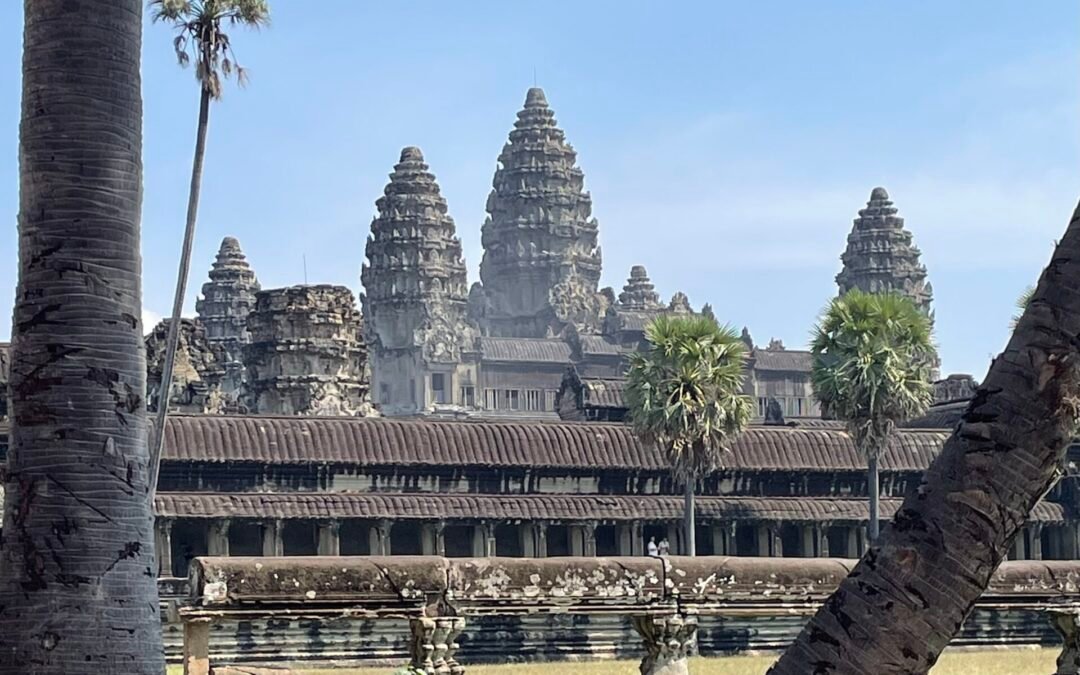
Angkor is known worldwide today as the abandoned city in the dense jungles of Cambodia – a place that, after its supposedly abrupt demise, was only rediscovered in the West many centuries later, in the 19th century, by French explorers. But how much truth is there behind this almost fairytale-like notion?
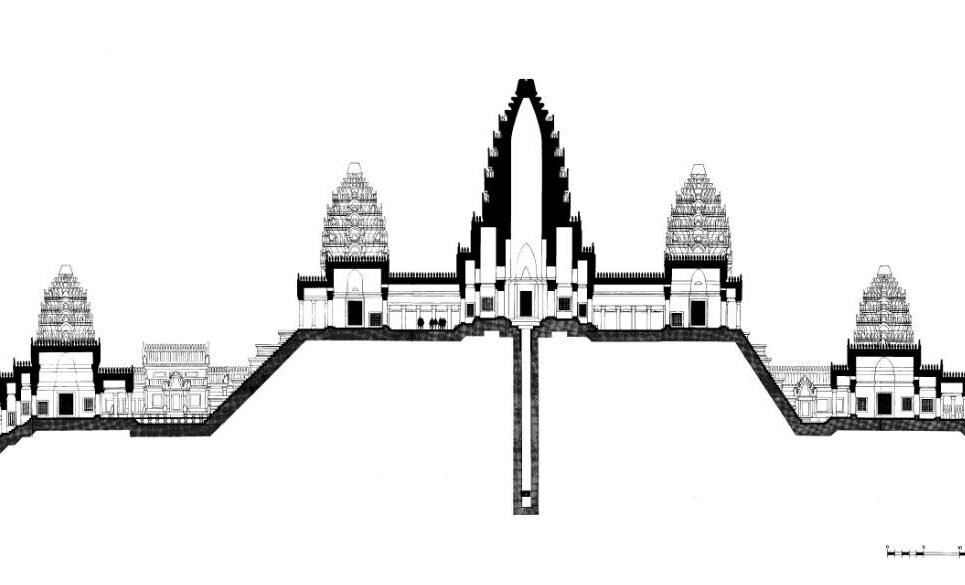
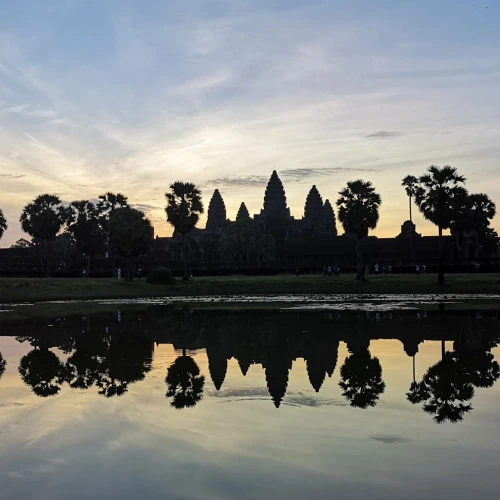
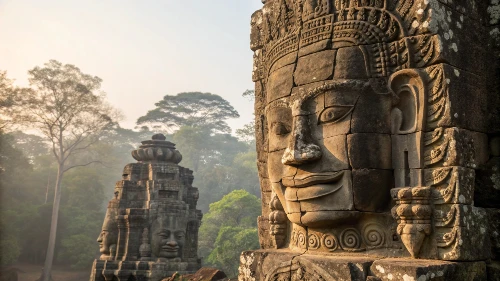
Angkor was not just any metropolis. It was arguably one of the most advanced hydraulic cities of its time – with an area larger than present-day Berlin. With well over a thousand temples, Angkor was also one of the largest urban centers in the world at that time. Precisely for this reason, the idea that a city of this size could simply have been abandoned seems almost absurd at first glance.
The exact reasons for its decline are difficult to reconstruct – not least because of the lack of primary written sources. Nevertheless, several developments are repeatedly linked to Angkor’s transformation. Online sources often mention prolonged periods of drought followed by particularly heavy monsoon rains. The conflict with the Ayutthaya kingdom, whose troops are believed to have attacked and plundered Angkor in 1431, also regularly surfaces in discussions.
However, the publication “Temple occupation and the tempo of collapse at Angkor Wat, Cambodia” does not attribute the causes to a single event, but rather to the interplay of several developments. One concept is central to this: transformation. Contrary to many accounts, Angkor was probably not abandoned overnight, but changed gradually over extended periods – until large parts of the former capital slowly lost their political significance.
The reasons for this transformation are complex and remain unclear to this day. The aforementioned extreme weather events likely played a significant role. That there were several prolonged periods of drought in the mid-14th and early 15th centuries, followed by particularly intense monsoon seasons, is now well documented – thanks in part to tree-ring-based hydroclimatic reconstructions by Brendan Buckley, sediment analyses of the West Baray by Mary Beth Day, and numerous indications of structural modifications to the water system itself.
The consequences of these climatic fluctuations must have been considerable. It is assumed that rice – the central foodstuff and basis of sustenance – could no longer be reliably harvested. To understand this, it is helpful to take a closer look at Angkor’s urban landscape at that time: Unlike modern cities, Angkor was not densely built. Large residential areas made of wood, rice paddies, water reservoirs, canals, and dams lay between the temples. City and landscape merged almost seamlessly.
This very complex water management made Angkor both strong – and vulnerable. During extreme droughts, the water level in parts of the system likely dropped drastically. Afterwards, heavy monsoon rains would have impacted an already weakened infrastructure. Canals had to be rerouted, dams repaired, and damaged infrastructure maintained. Studies by Damian Evans and Dan Penny also suggest that damage within this interconnected system could cascade down to larger areas, destabilizing them—local problems could have affected the entire water network. This is particularly drastic considering the importance of water deprivation for Angkor: agriculture, transportation routes, and vital religious functions.
However, climate alone likely does not fully explain Angkor’s transformation.
Between the 13th and 15th centuries, Southeast Asia underwent significant economic change. Maritime trade networks intensified, especially under the Ming Dynasty, and sea trade gained considerable importance. Port cities on coasts or major river systems became increasingly vital because goods such as Chinese porcelain, silk, and tropical hardwoods could be traded much more easily there.
Angkor, on the other hand, was primarily focused on agriculture, water management, and internal administration.
The city was not situated on a direct coastal route and was therefore significantly less flexible in the expanding maritime trade. At the same time, finds of Chinese ceramics and the reports of the Chinese diplomat Zhou Daguan show that trade also played an important role in Angkor. This may have been another crucial factor: political and economic importance increasingly shifted southward—to regions better connected to rivers and international trade routes.
Against this backdrop, the later rise in importance of Phnom Penh is hardly surprising. Its location on the Mekong River made trade considerably easier to organize than in the interior.
But Angkor also likely faced political challenges.
In 1431, the Siamese king Borommarachathirat II besieged and conquered Angkor. As a result, the Cambodian king at the time, Ponhea Yat, was forced to flee to Yasodharapura, as the city had become untenable against the Siamese attack. Ponhea Yat initially sought refuge in Basan (Srey Santhor), but after the city was flooded, he fled to Chaktomuk, present-day Phnom Penh.
Angkor also underwent religious changes.
Although this is not definitively proven, some historians suggest that the religious shift from Hinduism and Mahayana Buddhism to Theravada Buddhism may also have contributed to Angkor’s decline in importance.
For centuries, the rulers of Angkor legitimized their power through religious beliefs that closely connected the king to the divine. Theravada Buddhism, on the other hand, places significantly more emphasis on personal piety, compassion, and individual salvation than on the worship of a godlike ruler. Some researchers therefore assume that this shift may have weakened the ideological foundation of the monarchy.
Especially in an empire based on massive construction projects and the organization of large populations, such a loss of significance would not have been insignificant. According to inscriptions, more than 12,000 people worked on the Ta Prohm temple alone, while hundreds of thousands of farmers ensured the empire’s sustenance. Whether the religious shift actually had a direct impact on these structures cannot be definitively proven today. Nevertheless, some historians consider it another factor that may have contributed to Angkor’s long-term transformation.
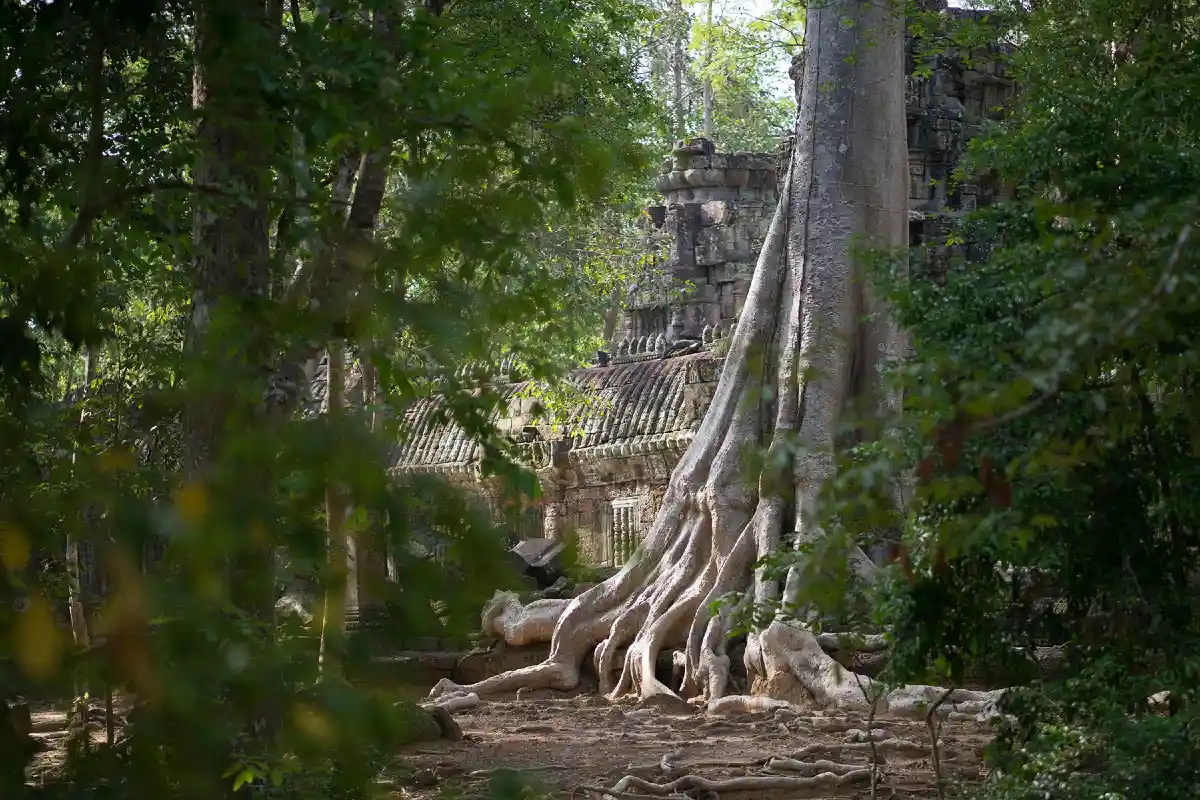
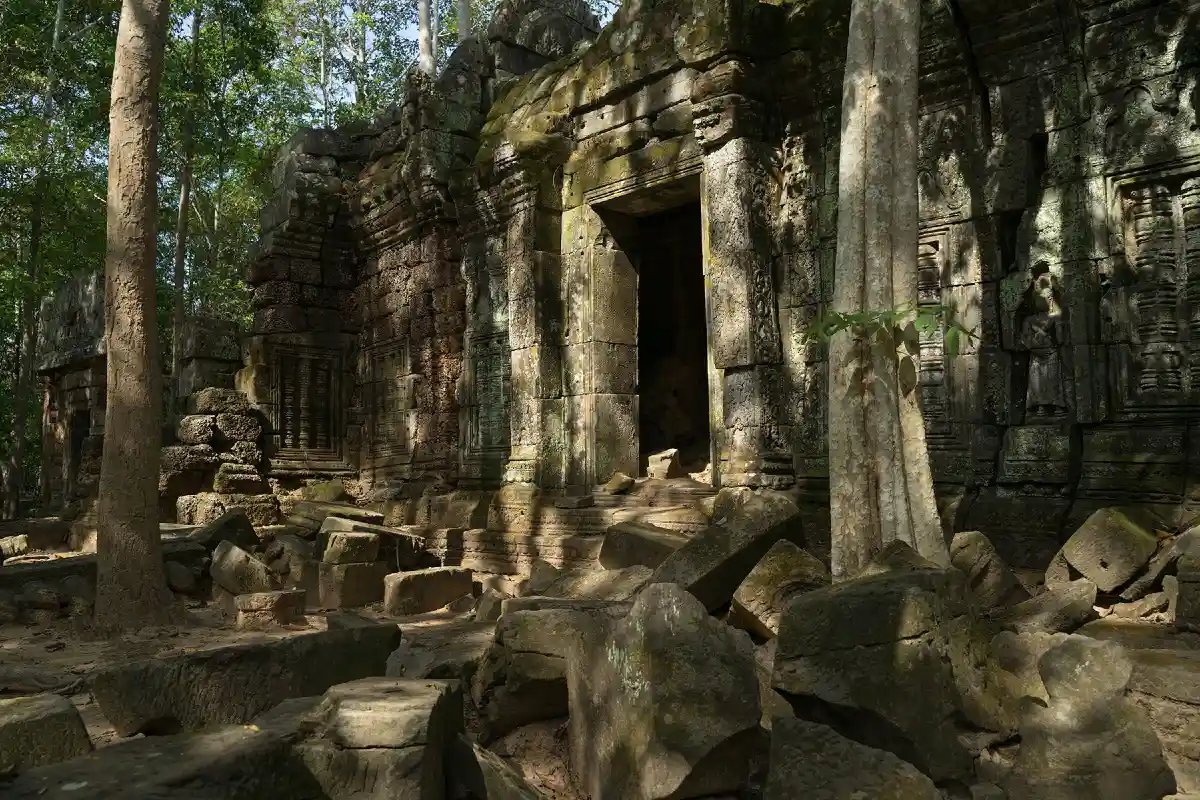
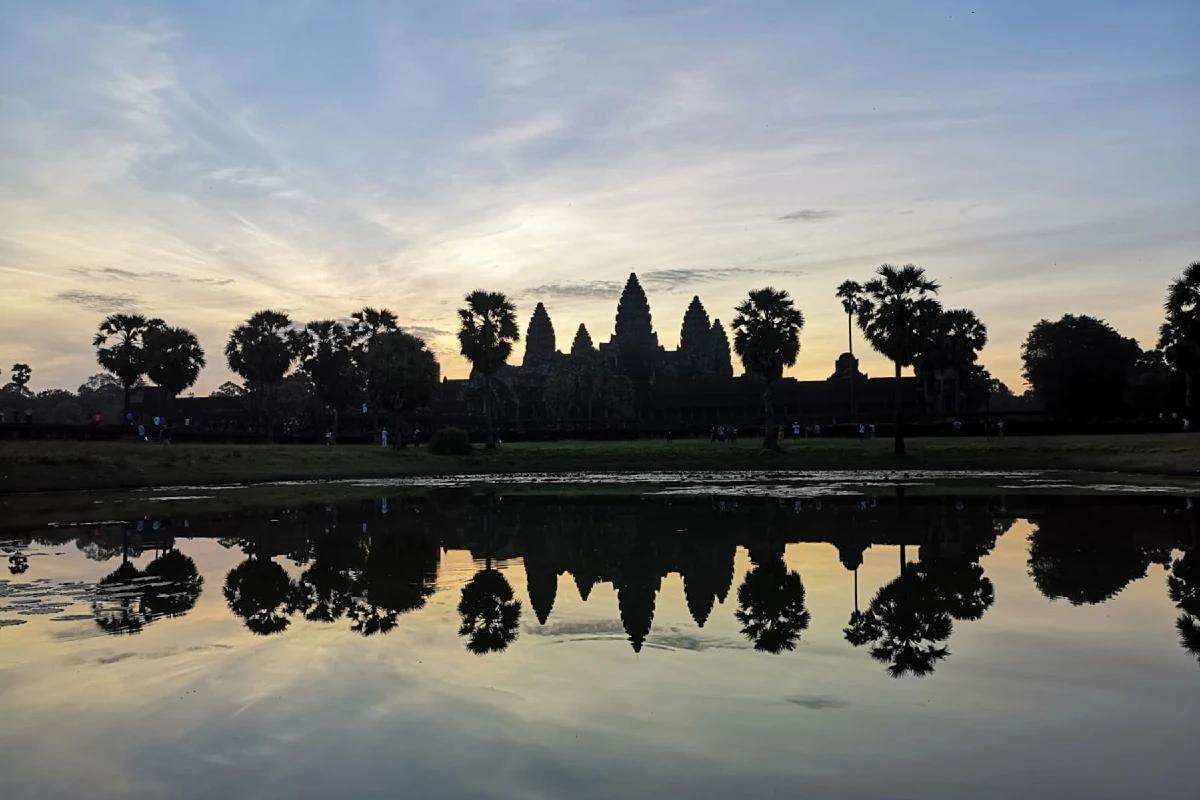
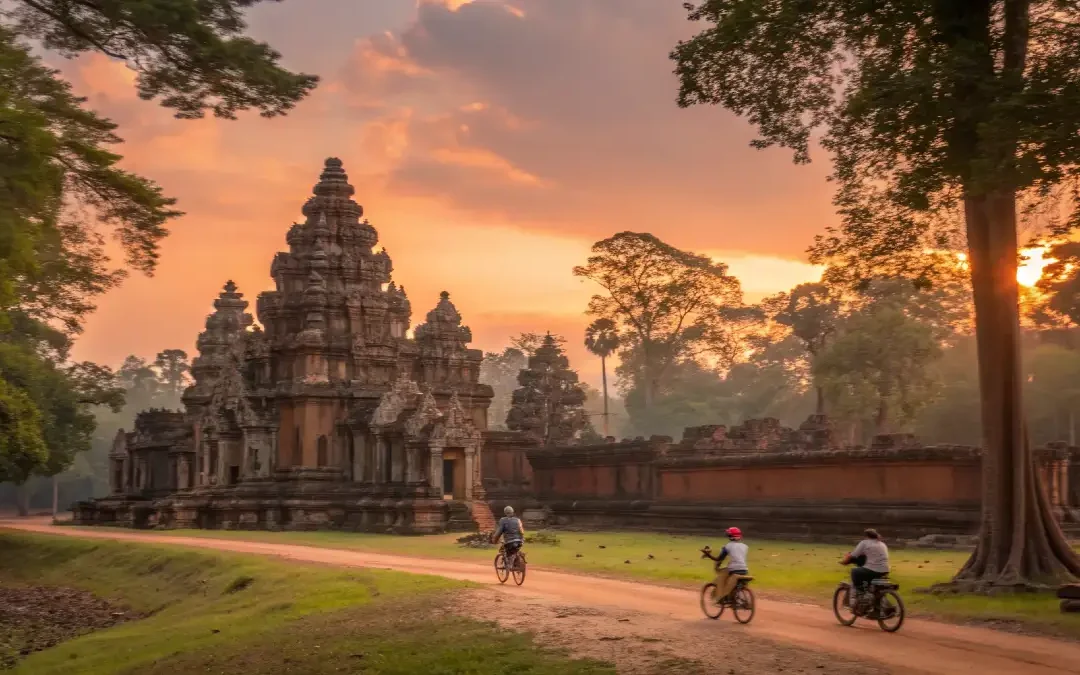
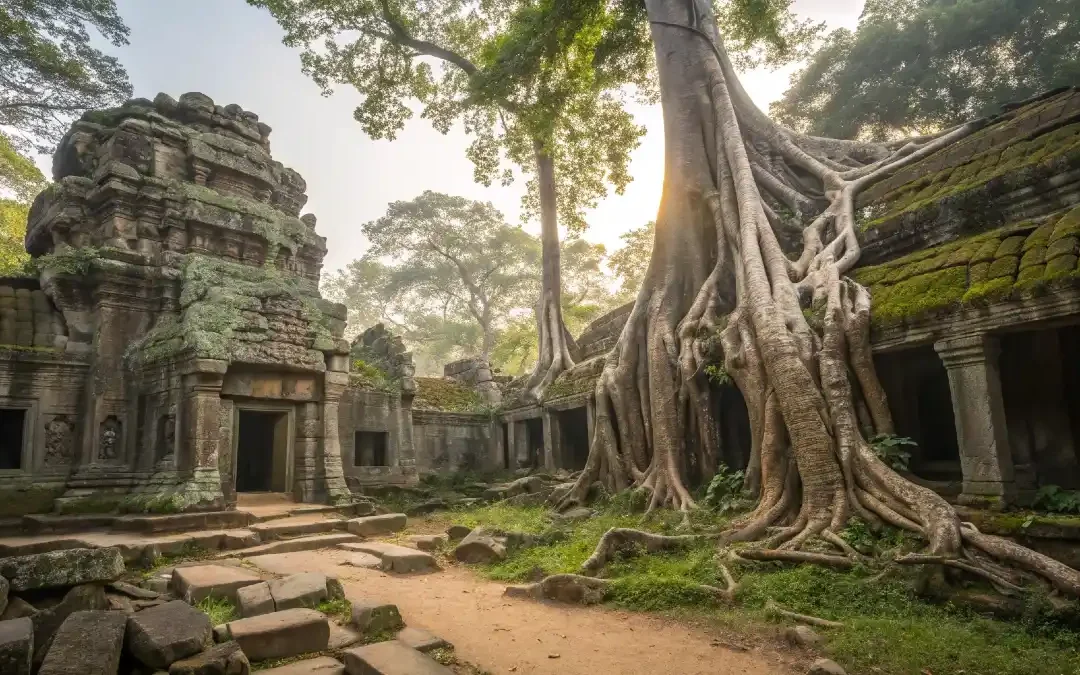
And this is precisely where the most important difference between myth and reality likely lies: Angkor was most likely not suddenly swallowed by the jungle. It did not disappear overnight, nor was it ever completely abandoned. Temples like Angkor Wat retained their religious significance, were maintained, and used by local communities. However, Angkor gradually lost its role as a political center. Power, trade, and population slowly shifted – while over the centuries, the jungle began to reclaim parts of the former metropolis.
Perhaps this is precisely where the true story of Angkor lies: not in a sudden demise, but in a slow transformation over generations.