Travel
What lies hidden beneath the main tower of Angkor Wat?
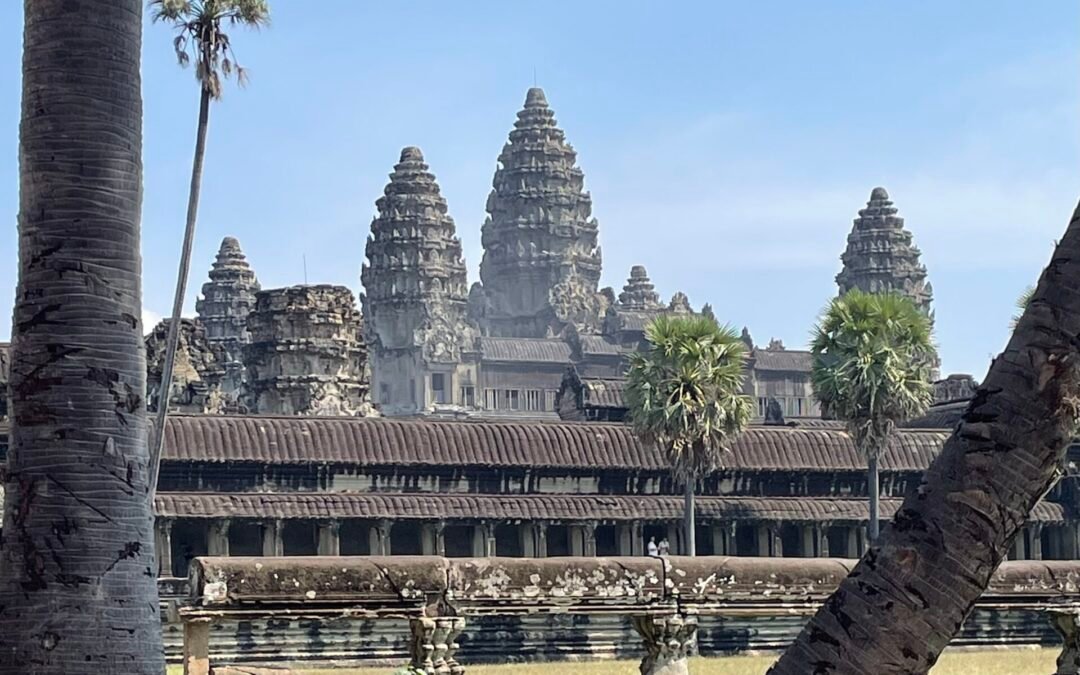
Angkor Wat enchants not only 2.2 million tourists annually (2019), but also the local residents and especially archaeologists. This is particularly true because the approximately 1000-year-old Hindu temple, dedicated to the god Vishnu, has yet to reveal all its secrets.
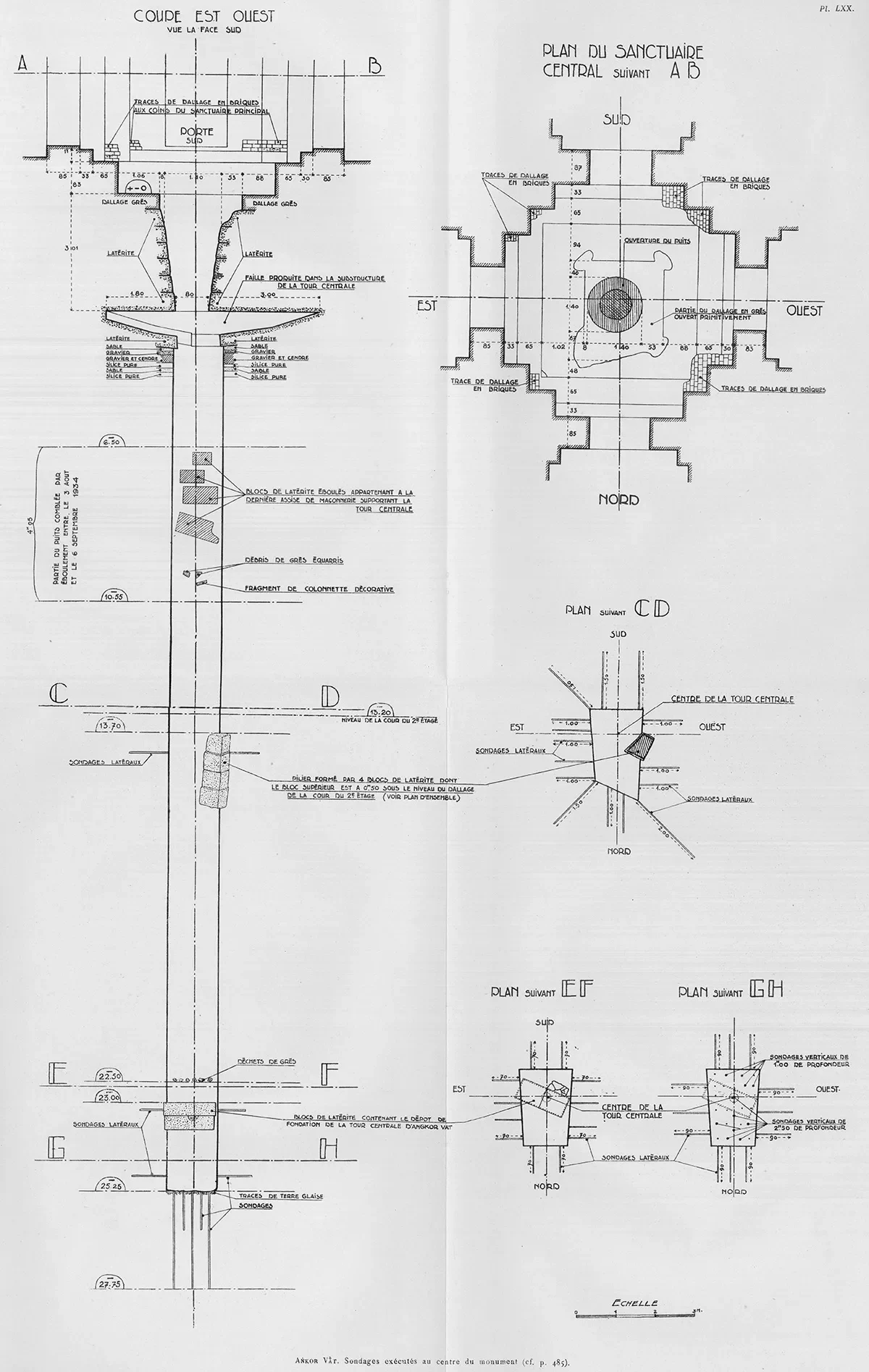
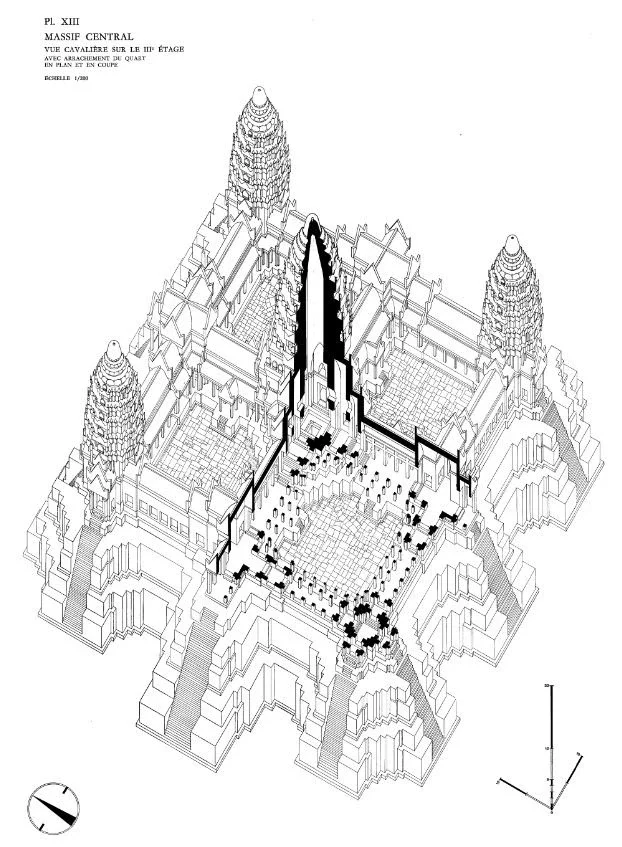
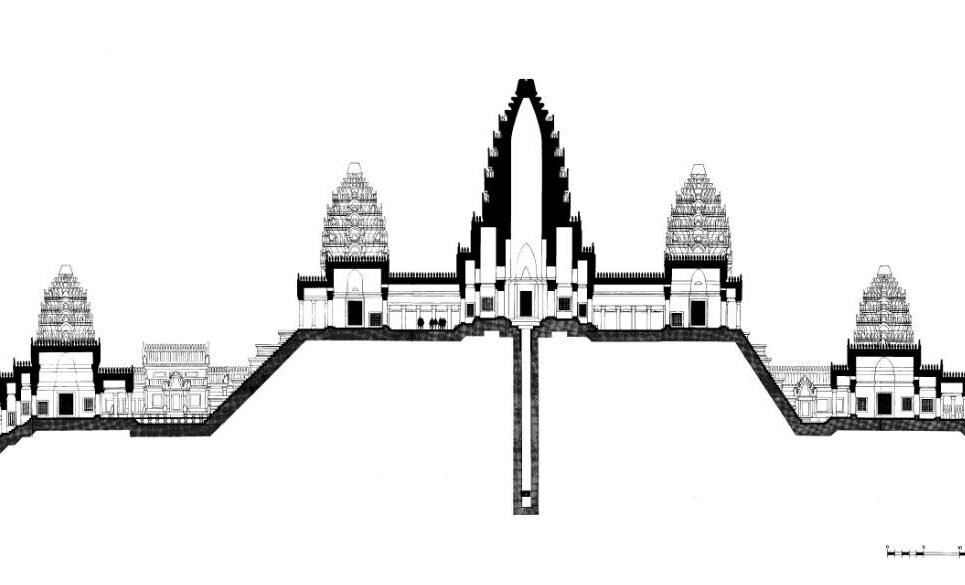
If you examine architectural drawings or old documents from French and Cambodian researchers from the early 20th century, several things become apparent that remain hidden from the average visitor. Among them is a shaft approximately 23 meters deep and 1.4 meters wide, extending vertically from the main tower down to the foundation. There are also indications of cavities within the tower’s spires.
But what purpose did these structures serve – and why are they inaccessible to visitors today?
To answer this question, it is worthwhile to take a closer look at the records of the French archaeologist Henri Marchal. He examined the shaft in detail in 1934, after it had already been discovered in 1908 by the French archaeologist Jean Commaille.
The shaft is set precisely in the center of the sandstone floor of the main tower and was systematically filled with various materials. These included sandstone chips, which were generated during the construction and decoration of the temple complex and, according to some interpretations, may have been deliberately placed there as offerings. In addition, layers of fine pink and yellowish sand were found, presumably for stabilization and compaction, as well as layers of clay and loam, which likely also served to protect against groundwater seepage. At a depth of approximately 23 meters, they finally encountered massive blocks of laterite – an iron-rich, very hard rock that was frequently used as a load-bearing foundation in Angkorian construction.
The various layers made excavation in the narrow and poorly ventilated shaft considerably more difficult. Nevertheless, Henri Marchal’s team made a discovery. Despite suspected looting in earlier times, two round gold leaves, pieces of crystal quartz, bronze fragments, and ceramic shards were among the items recovered. Gold was considered valuable and imperishable in the Khmer context, quartz is associated with purity and spiritual power in many religious traditions, and the bronze fragments may have originally been part of ritual objects.
Such shafts are not uncommon in Hindu temple construction. They are often interpreted as so-called “foundation deposits.” However, the precise circumstances surrounding Angkor Wat are not entirely clear.
Since Angkor Wat—unusually for Hindu temples—is oriented to the west, the theory is sometimes put forward that it is a kind of mausoleum. This sometimes leads to the assumption that the shaft could have served as a burial chamber. However, there is no convincing archaeological evidence for this assumption. In particular, the shaft itself provides no clear indications of a burial function and does not correspond to typical tomb structures. Accordingly, this interpretation is considered highly controversial.
The interpretation as a ritual foundation shaft seems considerably more plausible. At other temples, such as the Bayon, central shafts were also constructed and filled with ritual objects. Such deposits likely served the sacred consecration of the structure, its symbolic purification, and preparation for the divine presence—in the case of Angkor Wat, presumably Vishnu. Furthermore, it is assumed that the main tower, which likely represents the mythical Mount Meru, was symbolically protected and anchored in the cosmic order through such ritual acts.
According to the historian George Coedès, the cavities in the tower’s peaks could have represented a kind of counterpart to the lower repository. Ritual objects such as gold or small bronze statuettes may also have been deposited there, but these were likely stolen over time.
Together, these two areas could have formed a vertical axis—a so-called axis mundi. In some modern interpretations, this world axis is metaphorically described as a kind of “antenna” that symbolically channeled divine power from the upper level, through the center of the tower—where a statue of Vishnu once stood—down to the lower repository. A symbolic tripartite division into divine, human, and subterranean spheres is also occasionally suggested. However, there is no direct archaeological evidence for this cosmological interpretation; it is based primarily on religious studies.
The shaft is a symbol of the meticulous planning of Angkor Wat. Even though, due to a lack of archaeological evidence, one has to resort to many different interpretations, it is quite easy to surmise that the shaft had a highly religious/cosmological significance and functioned as a kind of inauguration of the temple.
It is also important to note that these documents provide no evidence whatsoever of complex tunnel systems or large secret chambers—such speculations have been repeatedly refuted.